
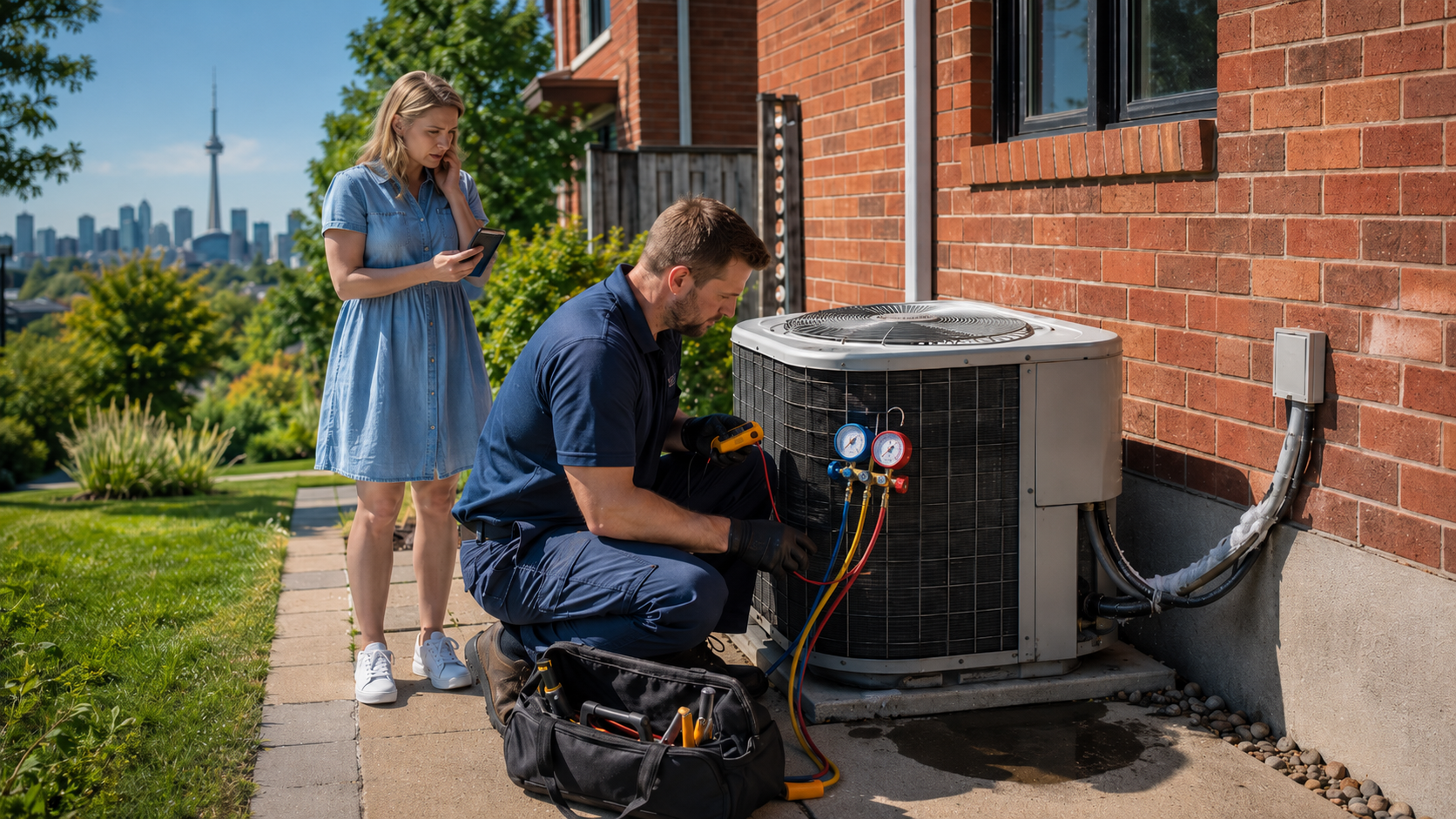
Toronto’s summers have become increasingly intense, with heat warnings now issued earlier each season. An aging or malfunctioning AC unit can fail exactly when you need it most. Homeowners researching air conditioning repair Toronto typically contact technicians only after a breakdown — but spotting warning signs early can prevent that outcome entirely. This guide walks through five clear indicators that your cooling system needs attention before the heat wave arrives.
Why Acting Early Saves You Money and Stress
HVAC technicians across Ontario report a predictable pattern every summer: service queues fill up within days of the first major heat advisory. Homeowners who call during peak heat often wait longer, pay emergency rates, and sometimes go without cooling for several days.
Booking an inspection in May or early June avoids all of that. A technician can identify worn components, low refrigerant, or failing electrical parts before they cause a full system shutdown. A minor repair addressed in spring typically costs a fraction of what an emergency replacement runs in July.
The goal is simple: don’t let a small issue become a crisis. The five signs below are the most reliable indicators that your AC system needs professional attention now, not later.
Sign 1 & 2 — Airflow and Temperature Problems
These two symptoms are among the most common reasons homeowners call for AC service in Toronto. Both point to issues inside the unit that worsen under heavy load.
Weak or Uneven Airflow
If some rooms in your home feel noticeably warmer than others, or airflow from vents seems weaker than usual, the system is not distributing cool air effectively. Common causes include:
- A clogged or dirty air filter restricting airflow through the system
- A failing blower motor unable to move air at full capacity
- Blocked or leaking ductwork reducing delivery to specific rooms
- A frozen evaporator coil caused by restricted airflow or low refrigerant
Replacing a clogged filter is something homeowners can handle themselves. But persistent weak airflow after a filter change points to a mechanical issue that requires a technician.
The Unit Blows Warm Air
An AC system that runs continuously but produces warm or room-temperature air is one of the clearest failure signals. This usually means refrigerant levels are low due to a leak, or the compressor — the core component that drives the cooling cycle — is not functioning correctly.
Neither issue resolves on its own. Low refrigerant cannot simply be “topped up” without finding and sealing the leak first. A compressor showing early symptoms of failure will eventually stop working entirely, often during the hottest day of the year.
Sign 3 & 4 — Noises, Leaks, and Moisture
A well-functioning AC unit operates quietly. Unusual sounds or visible moisture are signals the system is working outside its normal parameters.
Unusual Sounds From the System
Different sounds point to different problems:
- Banging or clanking — a loose or broken component inside the compressor or blower assembly
- Squealing or screeching — a worn fan belt or motor bearing under stress
- Clicking on startup and shutdown — normal; clicking that continues during operation suggests a relay or electrical fault
- Hissing or bubbling — a refrigerant leak, which requires immediate professional attention
Any new or worsening sound warrants an inspection. Ignoring mechanical noise often leads to cascading damage as one worn part puts stress on others.
Water or Refrigerant Leaks
Some condensation around the indoor unit is normal during humid weather. Pooling water, however, signals a blocked condensate drain line — a straightforward fix if caught early, but one that can cause water damage and mold growth if ignored.
A refrigerant leak presents differently: you may notice an oily residue near refrigerant lines, or a sweet chemical smell near the outdoor unit. According to Environment and Climate Change Canada, refrigerants used in residential AC systems are regulated substances, and only certified technicians are permitted to handle them.
Sign 5 — Your Energy Bills Spike Without Explanation
A sudden increase in electricity costs during spring — before you’ve been running the AC heavily — often traces back to the cooling system. An inefficient or partially failing AC unit draws more power to maintain the same output.
Short cycling is one common culprit. This is when the unit turns on and off repeatedly in short intervals rather than running full cooling cycles. It wastes energy, puts excessive wear on the compressor, and results in uneven cooling throughout the home. Dirty condenser coils, low refrigerant, and oversized units can all cause short cycling.
Tracking your monthly utility bills across seasons helps identify unusual consumption patterns. If your bill in May is noticeably higher than the same month last year, and usage habits haven’t changed, the AC system is worth inspecting.
What Toronto Homeowners Should Do Next
Identifying one or more of these signs is a clear prompt to schedule a professional inspection. A qualified HVAC technician will check refrigerant levels, inspect electrical components, clean coils, test airflow, and verify the thermostat calibration — all in a single visit.
Key takeaways before the heat wave hits:
- Weak airflow or warm air output — check the filter first, then call a technician if the problem persists
- Unusual noises or leaks — do not delay; these indicate active mechanical or refrigerant issues
- High energy bills with no clear cause — have the system inspected for short cycling or efficiency loss
- Book early — technician availability drops sharply once the first heat advisory is issued in Toronto
The U.S. Department of Energy notes that regular AC maintenance can improve system efficiency by up to 15% and significantly extend equipment lifespan. The same principle applies to any residential cooling system operating in a demanding summer climate. Acting on warning signs in spring is the most reliable way to stay cool — and avoid emergency repair costs — when Toronto’s heat wave finally arrives.